Strippers4k 24 12 04 Juniper Ren Skate And Stri Link Direct
Easily manage and swap NVIDIA DLSS versions for optimal gaming performance
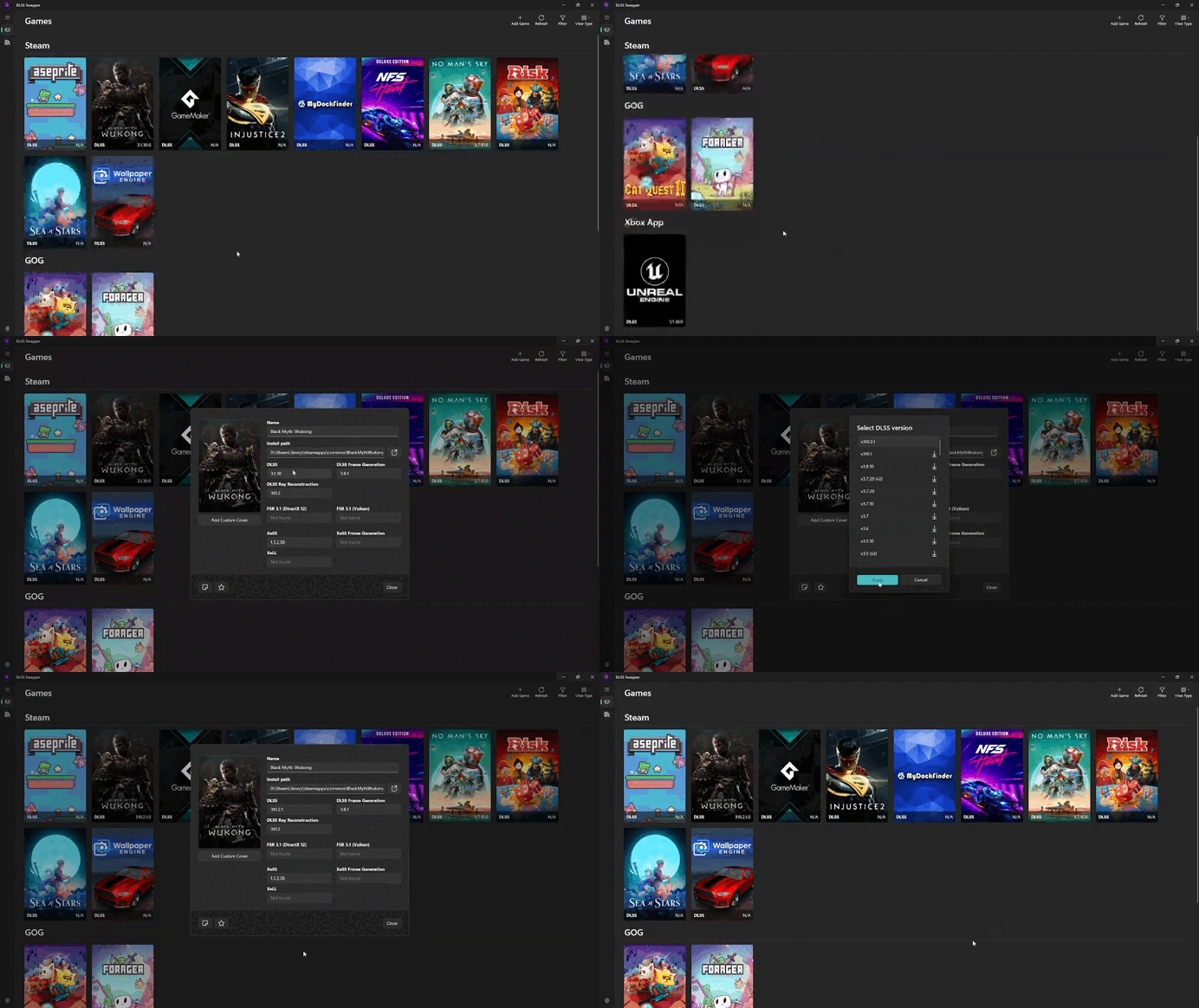
Easily manage and swap NVIDIA DLSS versions for optimal gaming performance
DLSS Swapper is an open-source tool designed to allow users to easily swap between different versions of NVIDIA's Deep Learning Super Sampling (DLSS) technology in games. This tool enables gamers to optimize their gaming experience by upgrading or downgrading the DLSS version used in a game, which can improve performance, image quality, or compatibility.
What sets DLSS Swapper apart is its comprehensive support for multiple upscaling technologies. Beyond NVIDIA DLSS, it also supports AMD FSR 3.1 and Intel XeSS upscaling libraries, making it a versatile tool for managing various upscaling technologies in games.
This short paper reads the fragmentary string “strippers4k 24 12 04 juniper ren skate and stri link” as a compressed, collage-like message and proposes coherent, layered meanings. I treat it as a set of tokens that combine numeric codes, proper nouns, and keywords; then I offer plausible interpretations across three complementary frames: a literal-media reading, a cultural/scene reading, and a symbolic/poetic reading. The goal is to make the fragment intelligible and engaging without insisting on any single “correct” decoding.
Go to DLSS-Swapper.Com and download the latest version. Choose between an installer or portable version.
Run the installer for a full installation, or extract the portable version to any folder of your choice. strippers4k 24 12 04 juniper ren skate and stri link
Launch the application and it will automatically detect your installed DLSS-enabled games. This short paper reads the fragmentary string “strippers4k
Select a game, choose your preferred DLSS version, and click to apply the changes. collage-like message and proposes coherent
This short paper reads the fragmentary string “strippers4k 24 12 04 juniper ren skate and stri link” as a compressed, collage-like message and proposes coherent, layered meanings. I treat it as a set of tokens that combine numeric codes, proper nouns, and keywords; then I offer plausible interpretations across three complementary frames: a literal-media reading, a cultural/scene reading, and a symbolic/poetic reading. The goal is to make the fragment intelligible and engaging without insisting on any single “correct” decoding.