Mia, their eldest, was a confident young woman who embraced her curves. She became a role model for her siblings, showing them that size did not define one's capabilities or beauty. Alex, on the other hand, was slender like his father but struggled with body dysmorphia, illustrating that body image issues aren't confined to any one size or group. Emma, the youngest, was a free spirit, learning from her family the importance of self-love and acceptance.

The event was a turning point for the family and the community. It sparked conversations about body positivity, inclusivity, and the need to break down taboos surrounding size and appearance. The family's participation had a ripple effect, inspiring others to share their stories and challenge societal norms. The story of this diverse family serves as a powerful reminder of the importance of love, acceptance, and the challenge of taboos. By fostering an environment where everyone feels valued and respected, we can help create a more inclusive and understanding society. The journey towards body positivity and acceptance is ongoing, but with families like Rachel's and John's leading the way, there's hope for a future where everyone can live without the shadow of judgment or taboo.

The family faced several challenges, not because of their size, but due to the societal norms and taboos surrounding body image. Rachel, being plus-size, often felt the sting of judgmental glances and hurtful comments. Despite her resilience, there were times when the negativity seeped into her self-perception, making her question her self-worth.

Rachel's story about overcoming societal pressure and finding self-love touched the hearts of several attendees. Mia shared her journey of embracing her size and finding confidence. Alex talked about the struggles with body image and the support he received from his family. Emma, with her innocence and purity, spread a message of love and acceptance.

However, Rachel and John had made a conscious decision to raise their children with the values of acceptance, love, and respect for everyone, regardless of their size or appearance. They taught their children that every body is unique and beautiful, emphasizing the importance of inner qualities over physical attributes.

One day, the family decided to participate in a community event aimed at promoting body positivity and challenging traditional beauty standards. They prepared a booth where each member could share their personal stories, struggles, and triumphs. The event drew a large crowd, and the family's openness and honesty about their experiences resonated with many.

Once upon a time, in a vibrant, bustling city, there lived a family that was as diverse in size as they were in personality. The family consisted of parents, Rachel and John, and their three children, Mia, Alex, and the youngest, Emma. Rachel was a plus-size woman with a warm smile and an infectious laugh, while John was slender with a kind heart. Their children ranged in size as well, reflecting a realistic and diverse family portrait.
A world of geom

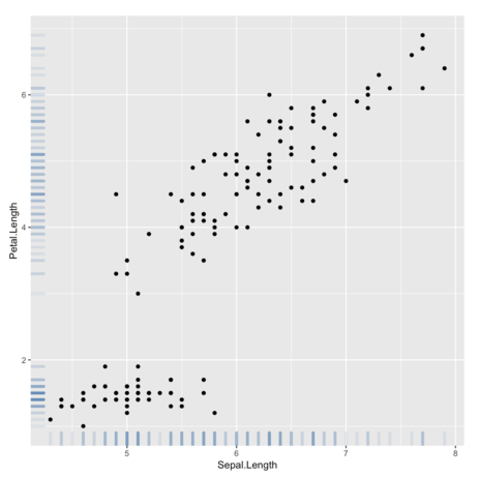
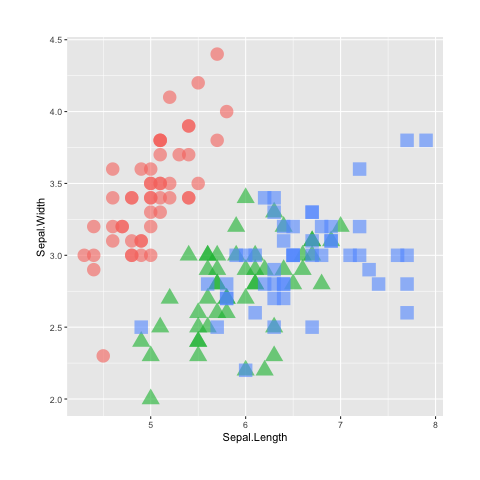
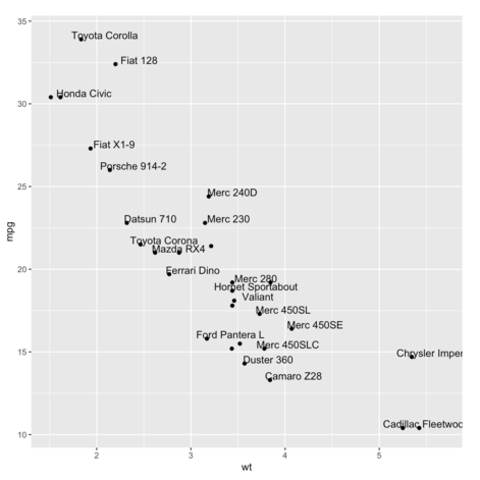
ggplot2 builds charts through layers using geom_ functions. Here is a list of the different available geoms. Click one to see an example using it.

geom_bar geom_bin geom_boxplot geom_density geom_error geom_hex geom_hist geom_hline geom_jitter geom_label geom_line geom_point geom_polygon geom_rect geom_ribbon geom_rug geom_segment geom_smooth geom_text geom_tile geom_violin geom_vline
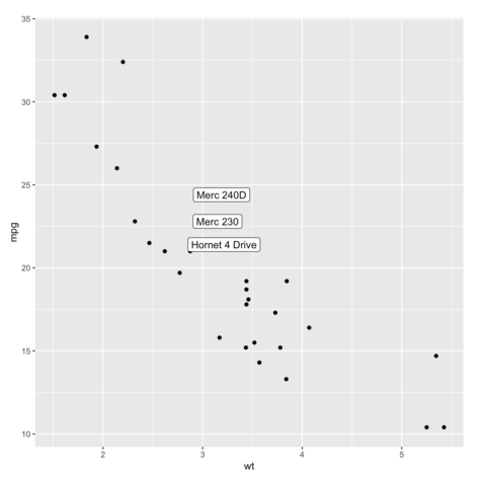
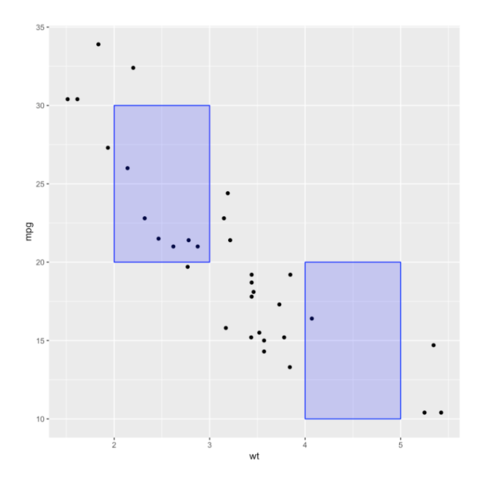
Annotation with ggplot2

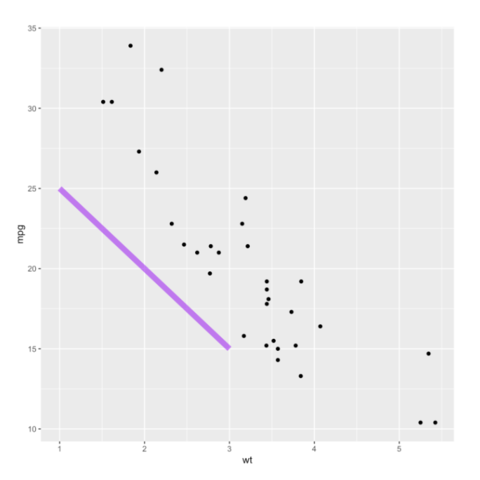
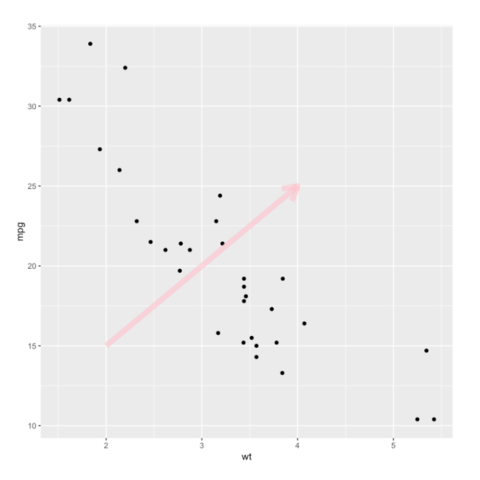
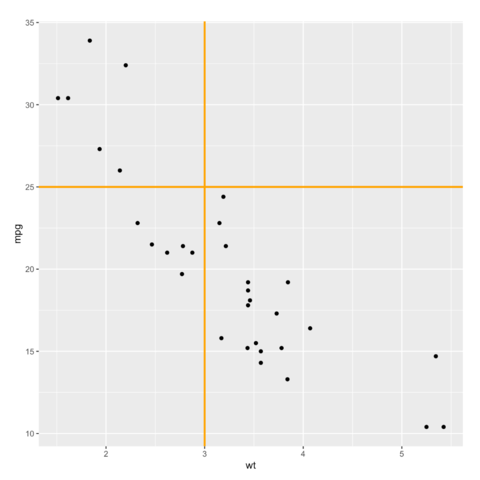
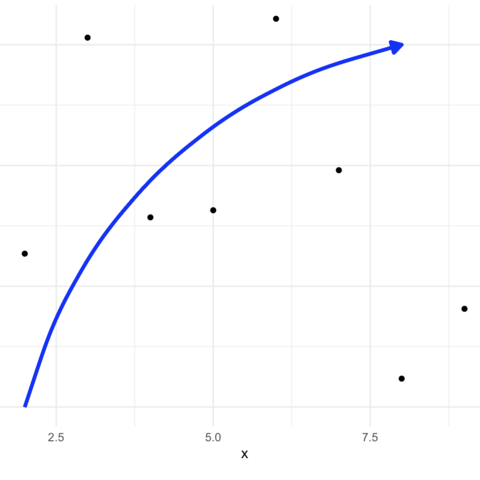
Annotation is a key step in data visualization. It allows to highlight the main message of the chart, turning a messy figure in an insightful medium. ggplot2 offers many function for this purpose, allowing to add all sorts of text and shapes.


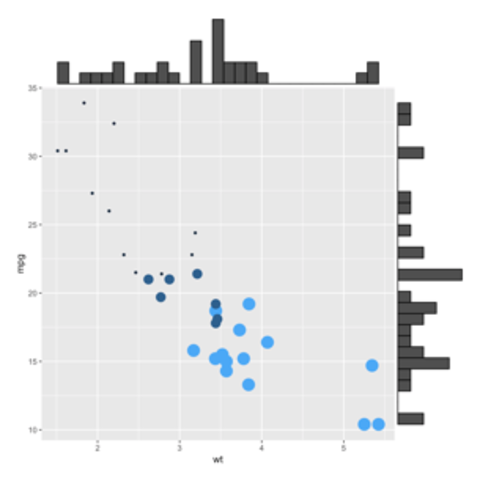
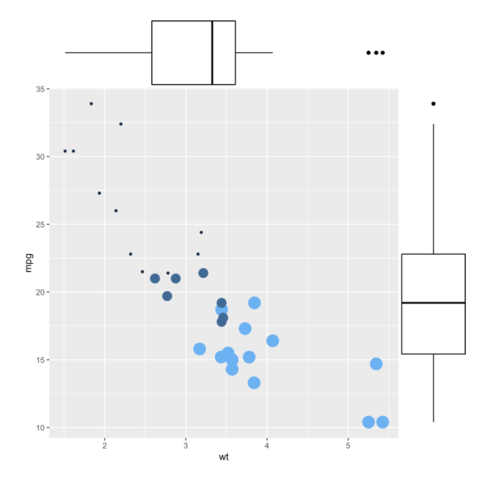
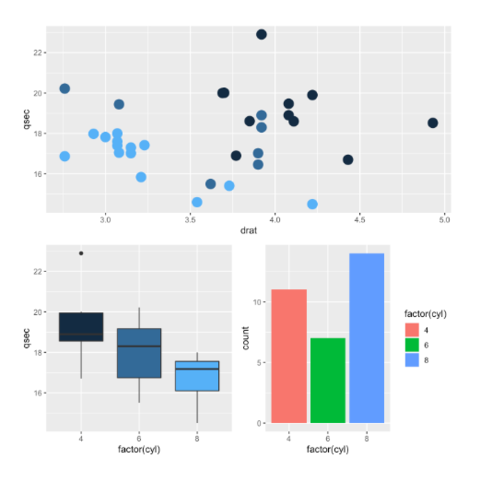
Marginal plot

Marginal plots are not natively supported by ggplot2, but their realisation is straightforward thanks to the ggExtra library as illustrated in graph #277.


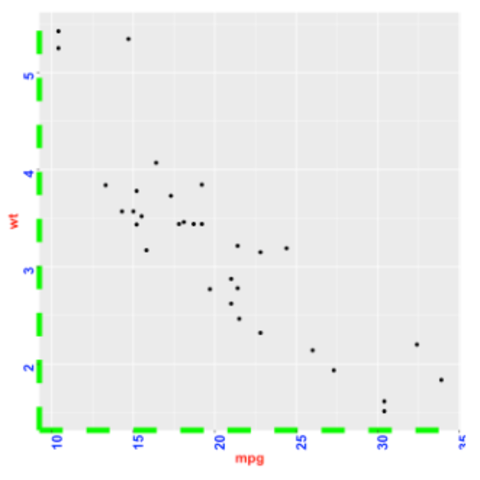
ggplot2 chart appearance

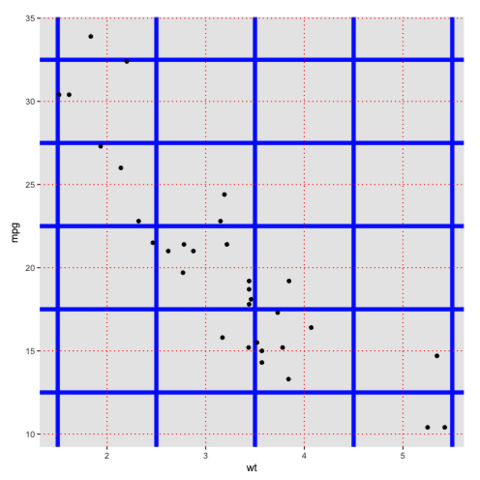
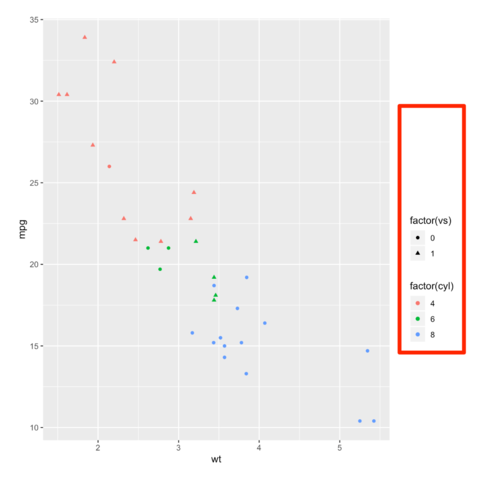
The theme() function of ggplot2 allows to customize the chart appearance. It controls 3 main types of components:

Re-ordering with ggplot2


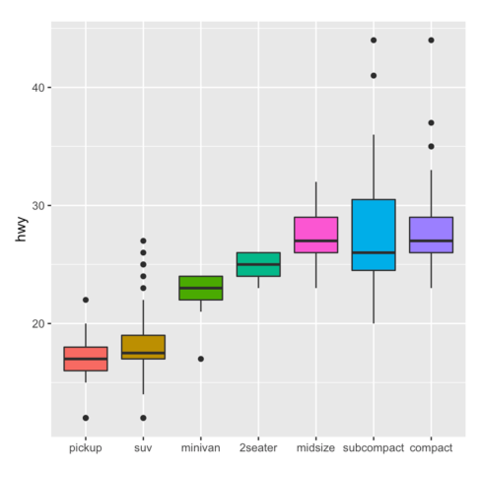
When working with categorical variables (= factors), a common struggle is to manage the order of entities on the plot.

Post #267 is dedicated to reordering. It describes 3 different way to arrange groups in a ggplot2 chart:


Read post
Tidyverse

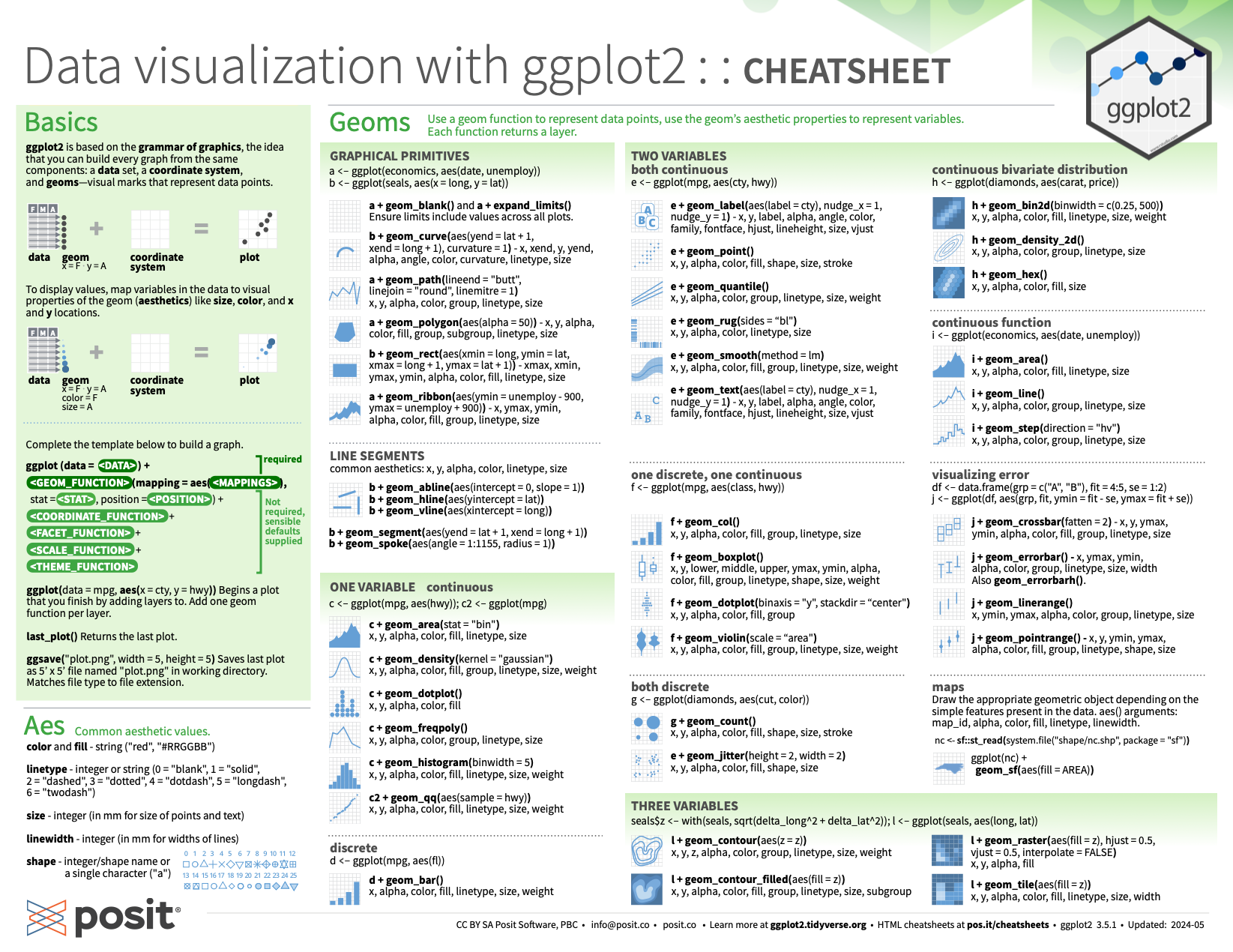
Here’s the official ggplot2 cheatsheet created by Posit. It covers all the key concepts of the library.

I've also compiled it with the most useful R and data visualization cheatsheets into a single PDF you can download:

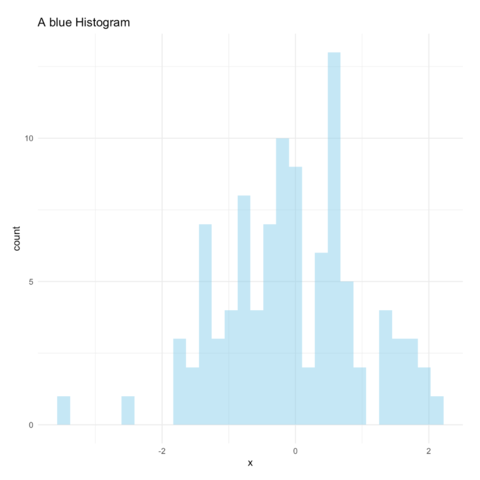
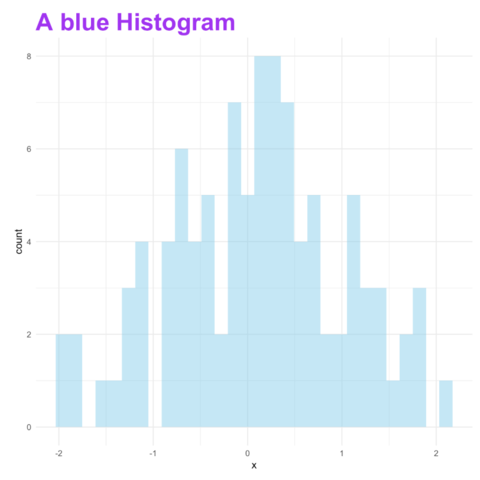
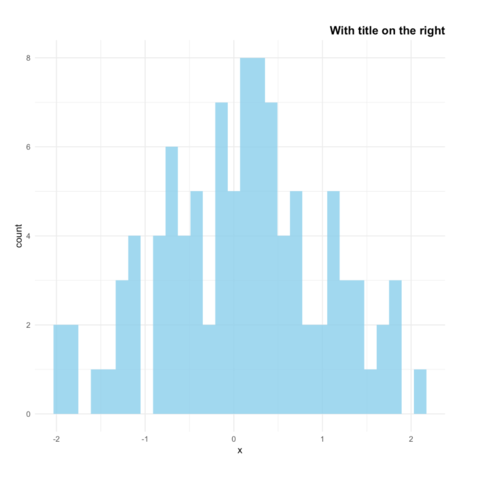
ggplot2 title

The ggtitle() function allows to add a title to the chart. The following post will guide you through its usage, showing how to control title main features: position, font, color, text and more.


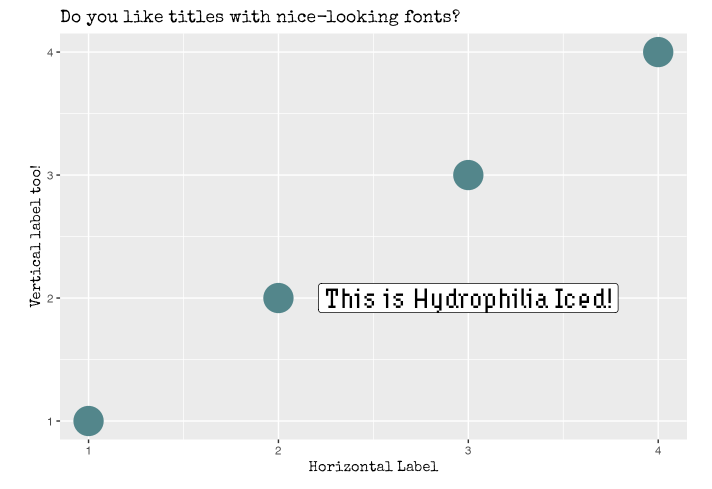
Use custom fonts with ggplot2

If you don't want your plot to look like any others, you'll definitely be interested in using custom fonts for your title and labels! This is totally possible thanks to 2 main packages: ragg and showtext. The blog-post below should help you using any font in minutes.


Small multiples: facet_wrap() and facet_grid()

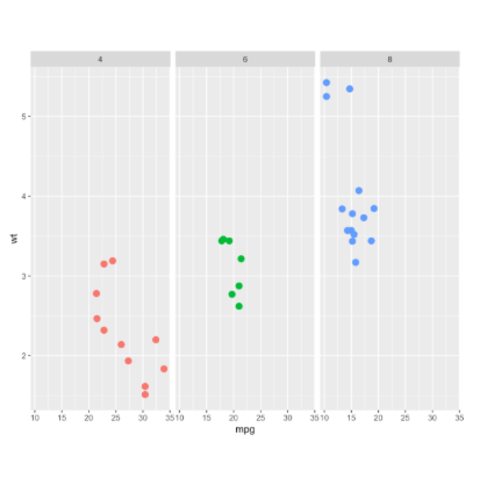
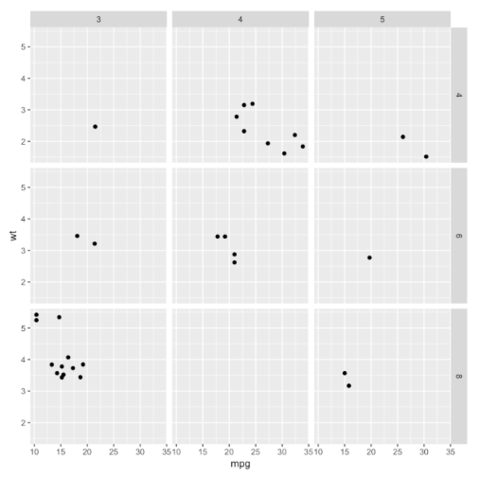
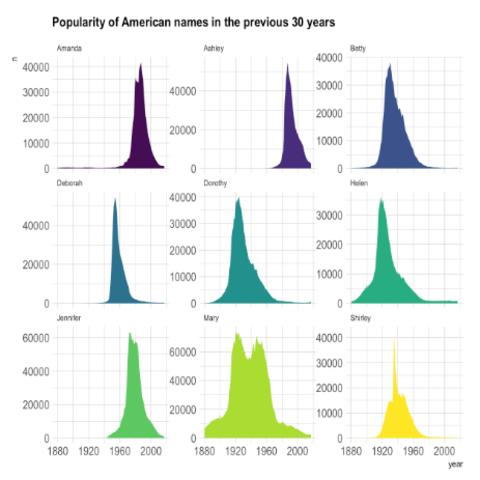
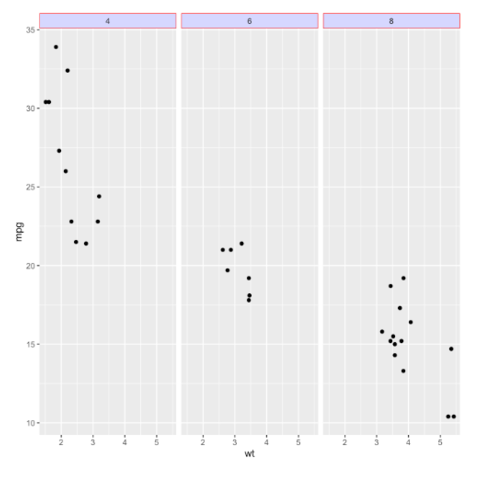
Small multiples is a very powerful dataviz technique. It split the chart window in many small similar charts: each represents a specific group of a categorical variable. The following post describes the main use cases using facet_wrap() and facet_grid() and should get you started quickly.

A set of pre-built themes

It is possible to customize any part of a ggplot2 chart thanks to the theme() function. Fortunately, heaps of pre-built themes are available, allowing to get a good style with one more line of code only. Here is a glimpse of the available themes. See code

Plus Size Family Taboo V03 By Chaixasgames Fixed (Premium)

Mia, their eldest, was a confident young woman who embraced her curves. She became a role model for her siblings, showing them that size did not define one's capabilities or beauty. Alex, on the other hand, was slender like his father but struggled with body dysmorphia, illustrating that body image issues aren't confined to any one size or group. Emma, the youngest, was a free spirit, learning from her family the importance of self-love and acceptance.

The event was a turning point for the family and the community. It sparked conversations about body positivity, inclusivity, and the need to break down taboos surrounding size and appearance. The family's participation had a ripple effect, inspiring others to share their stories and challenge societal norms. The story of this diverse family serves as a powerful reminder of the importance of love, acceptance, and the challenge of taboos. By fostering an environment where everyone feels valued and respected, we can help create a more inclusive and understanding society. The journey towards body positivity and acceptance is ongoing, but with families like Rachel's and John's leading the way, there's hope for a future where everyone can live without the shadow of judgment or taboo.

The family faced several challenges, not because of their size, but due to the societal norms and taboos surrounding body image. Rachel, being plus-size, often felt the sting of judgmental glances and hurtful comments. Despite her resilience, there were times when the negativity seeped into her self-perception, making her question her self-worth.

Rachel's story about overcoming societal pressure and finding self-love touched the hearts of several attendees. Mia shared her journey of embracing her size and finding confidence. Alex talked about the struggles with body image and the support he received from his family. Emma, with her innocence and purity, spread a message of love and acceptance.

However, Rachel and John had made a conscious decision to raise their children with the values of acceptance, love, and respect for everyone, regardless of their size or appearance. They taught their children that every body is unique and beautiful, emphasizing the importance of inner qualities over physical attributes.

One day, the family decided to participate in a community event aimed at promoting body positivity and challenging traditional beauty standards. They prepared a booth where each member could share their personal stories, struggles, and triumphs. The event drew a large crowd, and the family's openness and honesty about their experiences resonated with many.

Once upon a time, in a vibrant, bustling city, there lived a family that was as diverse in size as they were in personality. The family consisted of parents, Rachel and John, and their three children, Mia, Alex, and the youngest, Emma. Rachel was a plus-size woman with a warm smile and an infectious laugh, while John was slender with a kind heart. Their children ranged in size as well, reflecting a realistic and diverse family portrait.
Related chart types


plus size family taboo v03 by chaixasgames fixed
Ggplot2
plus size family taboo v03 by chaixasgames fixed
Animation
plus size family taboo v03 by chaixasgames fixed
Interactivity
plus size family taboo v03 by chaixasgames fixed
3D
plus size family taboo v03 by chaixasgames fixed
Caveats
plus size family taboo v03 by chaixasgames fixed
Data art