Intrigued, Kavita Aunty decided to learn more about the update. She visited the manufacturer's website and discovered that the update would not only patch existing security holes but also introduce new features to enhance her phone's performance.
Kavita Aunty, a 55-year-old retired schoolteacher from Mumbai, had always been fascinated by technology. She was one of the first in her family to adopt a smartphone and was quite adept at navigating the digital world. Her family often joked that she was the most tech-savvy aunt in their community.
As she began to install the update, Kavita Aunty couldn't help but think about the numerous times she had helped her family members and friends troubleshoot their own phone issues. She realized that, in doing so, she had inadvertently become their go-to "tech support" aunty.
One day, while scrolling through her social media feed, Kavita Aunty received a notification that her phone's operating system required a security update. The message read: "Your device is vulnerable to several high-risk threats. Please update your OS to ensure your data's safety."
MichiganView is a consortium of academic member institutions dedicated to promoting the use and advancing the science of remote sensing technologies in Michigan schools, governments, and industries. MichiganView coordinates programs and services that emphasize remote sensing education, training, and research.
As a state member of AmericaView, MichiganView is part of a nationwide partnership that connects the work of innovative remote sensing scientists and educators from around the country. AmericaView is funded by a grant from the U.S. Geological Survey.
For more information on the AmericaView program, please visit AmericaView.org.
For a map of the state consortium members, please visit AmericaView membership map for more information.
Intrigued, Kavita Aunty decided to learn more about the update. She visited the manufacturer's website and discovered that the update would not only patch existing security holes but also introduce new features to enhance her phone's performance.
Kavita Aunty, a 55-year-old retired schoolteacher from Mumbai, had always been fascinated by technology. She was one of the first in her family to adopt a smartphone and was quite adept at navigating the digital world. Her family often joked that she was the most tech-savvy aunt in their community.
As she began to install the update, Kavita Aunty couldn't help but think about the numerous times she had helped her family members and friends troubleshoot their own phone issues. She realized that, in doing so, she had inadvertently become their go-to "tech support" aunty.
One day, while scrolling through her social media feed, Kavita Aunty received a notification that her phone's operating system required a security update. The message read: "Your device is vulnerable to several high-risk threats. Please update your OS to ensure your data's safety."
This link contains information on images generated from the MODIS sensors on NASA's Aqua and Terra satellites dating back to December 2008. There are multiple types of images available.
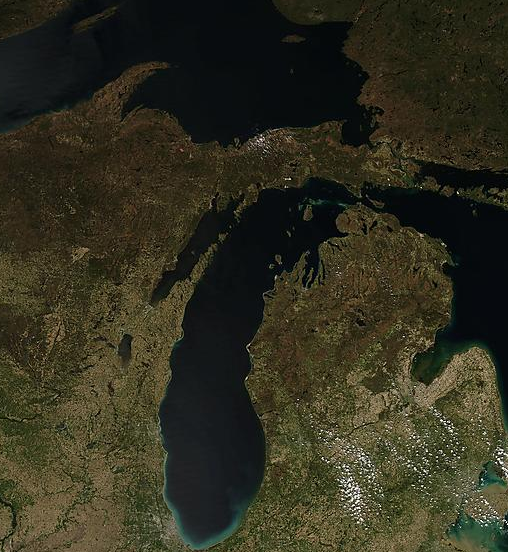
Beginning with the launch of Landsat 1 in 1972, Landsat holds the world record for continuous space-based image acquisition. This page contains links for imagery from Landsat 5, 7, and 8, as well as a calendar showing the dates when the satellites will pass over Michigan. indian aunty sec upd
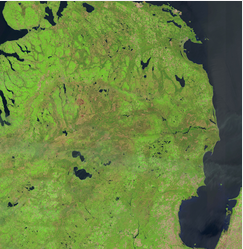
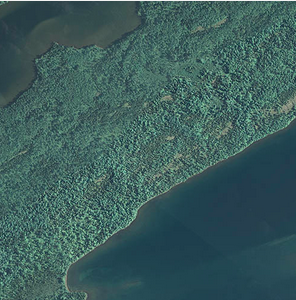
Administrated by the U.S. Department of Agriculture's Farm Service Agency (FSA), NAIP imagery is collected during the agricultural growing season for leaf-on aerials. This page includes imagery for each county in Michigan and includes both natural color and color infrared (CIR). Intrigued, Kavita Aunty decided to learn more about
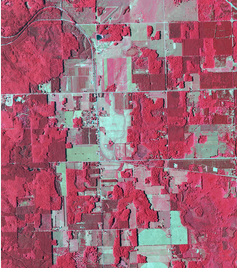
The Great Lakes Border Flight Imagery includes imagery from 2008-2009 encompassing the Great Lakes borders. This dataset is made up of natural color orthoimages, which contain geographic data representing actual ground measurements and coordinates. She was one of the first in her
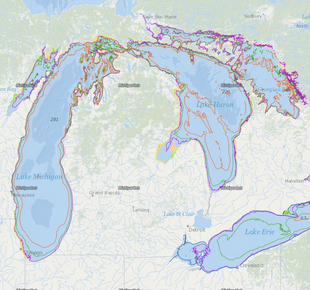
This page includes a number of online environmental maps developed by MTRI and other organizations. Examples include water quality, invasive wetland species, and submerged aquatic vegetation.