Conquer the arena with our advanced Apex Legends aimbot. Gain the competitive advantage you need with precision targeting, adaptable settings, and seamless game integration.
He fed it power. The display blinked awake with a modest green: version 1.37. The firmware felt older than the build date, a collage of patches and whispered fixes. Its menus were terse, efficient — a language from engineers who distrusted small talk. The Aladdin’s purpose was simple on paper: bridge GSM handsets and the systems they talked to. In practice it was a translator, a locksmith, and sometimes, a liar.
Dawn found the warehouse quiet. The Aladdin’s green LED dimmed as Elias unplugged it, returning it to the Pelican case like a relic. Outside, the city awoke with the habitual clatter of delivery trucks and the distant hiss of freeway air. Devices everywhere resumed their small dramas: heartbeats, pings, small surrenderings of data. The Aladdin would do its work again, elsewhere, in other hands. It would parse and translate, expose and conceal, hold its little ethical judgements within the terse borders of its firmware. Gsm Aladdin V2 1.37
As the hours glided, Elias began to see patterns. The Aladdin did not merely extract data; it translated context. It could reconstruct an afternoon from packet timings and tower handoffs: a driver’s route, a teenager’s doomed attempt to hide a conversation, a courier’s predictable chain of short calls. Each artifact was a thread. The Aladdin wove them together into a tapestry that was not entirely true and not entirely false — a narrative of devices acting like people, of machines leaving footprints only other machines could read. He fed it power
In the days that followed, the story of the Aladdin became a quiet legend among a few salvage hunters and systems folk — a machine that moved between translation and restraint, that offered clarity without spectacle. People whispered of the firmware’s gentleness, of version 1.37’s habit of returning empty logs when nothing worth taking was there. Some said the device had a conscience— others said it was simply well-engineered. Both were true in their own ways. Its menus were terse, efficient — a language
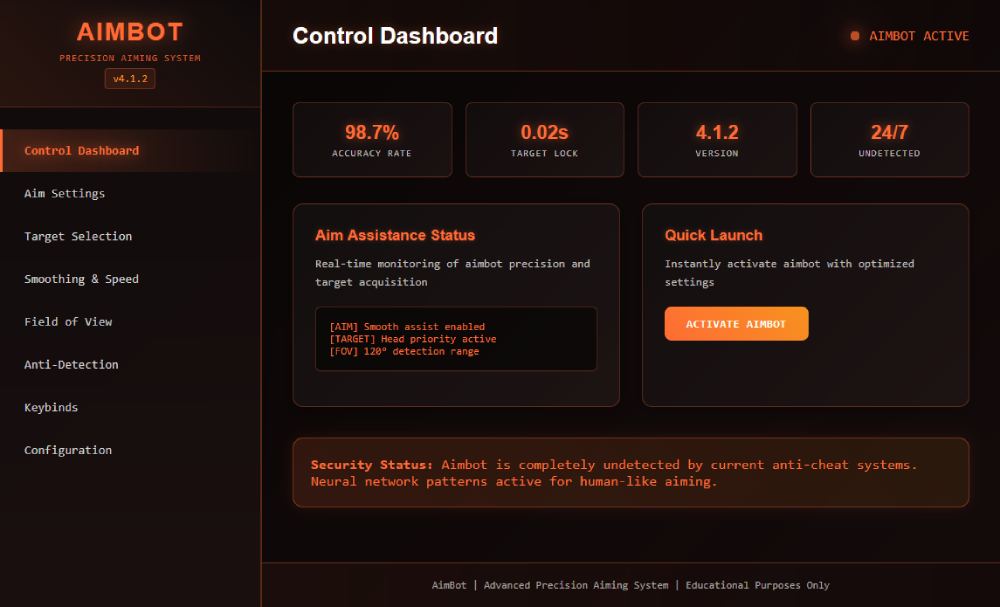
Join thousands of players who have enhanced their gaming experience
No hidden fees or premium features. Everything is completely free forever.
Scanned and verified by multiple antivirus engines. Safe for your computer.
Regular updates ensure compatibility with the latest Apex Legends versions.
Join a community of satisfied players who trust our aimbot.
Get started in 3 simple steps
Click the download button above to get the latest version. Extract the ZIP file to any folder on your computer.
Double-click the executable file to start the aimbot. No installation required - it runs directly from the folder.
Open Apex Legends and start playing. The aimbot will automatically enhance your targeting.
He fed it power. The display blinked awake with a modest green: version 1.37. The firmware felt older than the build date, a collage of patches and whispered fixes. Its menus were terse, efficient — a language from engineers who distrusted small talk. The Aladdin’s purpose was simple on paper: bridge GSM handsets and the systems they talked to. In practice it was a translator, a locksmith, and sometimes, a liar.
Dawn found the warehouse quiet. The Aladdin’s green LED dimmed as Elias unplugged it, returning it to the Pelican case like a relic. Outside, the city awoke with the habitual clatter of delivery trucks and the distant hiss of freeway air. Devices everywhere resumed their small dramas: heartbeats, pings, small surrenderings of data. The Aladdin would do its work again, elsewhere, in other hands. It would parse and translate, expose and conceal, hold its little ethical judgements within the terse borders of its firmware.
As the hours glided, Elias began to see patterns. The Aladdin did not merely extract data; it translated context. It could reconstruct an afternoon from packet timings and tower handoffs: a driver’s route, a teenager’s doomed attempt to hide a conversation, a courier’s predictable chain of short calls. Each artifact was a thread. The Aladdin wove them together into a tapestry that was not entirely true and not entirely false — a narrative of devices acting like people, of machines leaving footprints only other machines could read.
In the days that followed, the story of the Aladdin became a quiet legend among a few salvage hunters and systems folk — a machine that moved between translation and restraint, that offered clarity without spectacle. People whispered of the firmware’s gentleness, of version 1.37’s habit of returning empty logs when nothing worth taking was there. Some said the device had a conscience— others said it was simply well-engineered. Both were true in their own ways.