









Always in sync, even across episodes
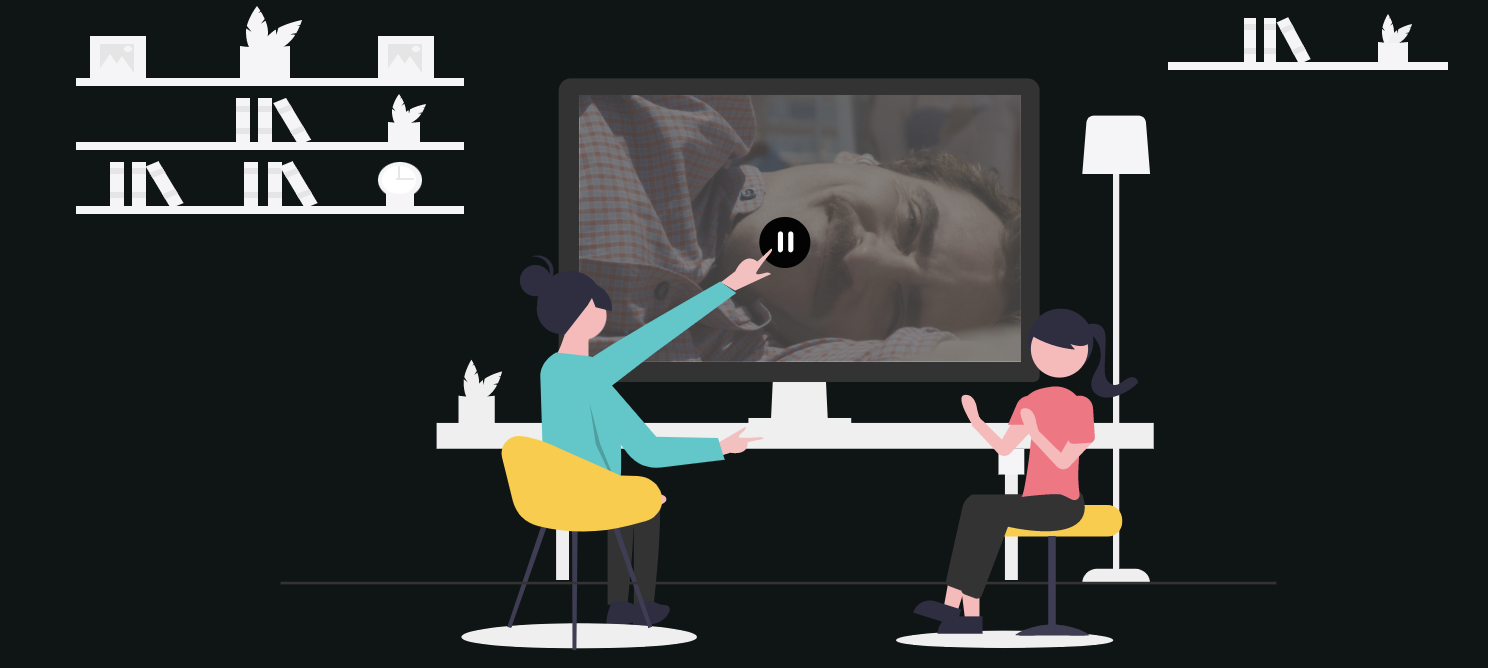
No more "wait, let me pause" moments. Our sync engine keeps everyone frame-perfect—even when you binge multiple episodes in one party.

Start playing any video on Netflix, Disney+, or 10+ supported platforms.
Click the Flickcall logo on top right once video starts or hit the Flickcall icon on chrome toolbar. Your watch party is ready in one click.
Copy the party link and send it to your friends. They join with one click—no sign-up required.
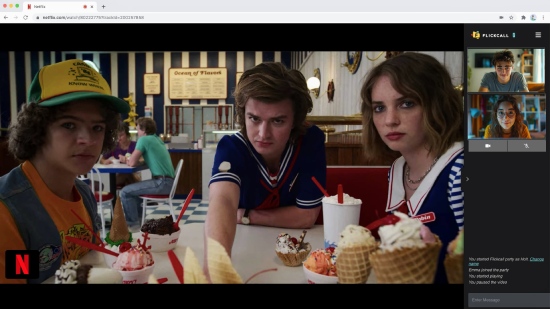
Create watch parties on Netflix, Disney+, JioHotstar, JioHotstar, HBO Max, MAX, Hulu, Prime Video, Youtube, Zee5, Sony Liv, JioHotstar with Flickcall.

No more "wait, let me pause" moments. Our sync engine keeps everyone frame-perfect—even when you binge multiple episodes in one party.

Catch your friends gasping at plot twists. Share laughter in real-time. Video chat makes every watch party feel like you're on the same couch.

Install the extension, play any video, click the Flickcall icon. That's it—share the link and you're watching together.
When you pause video, your mic unmutes. When you play, it mutes. Smart Mic knows when you need to talk. No fumbling with buttons, just natural conversation.
We use peer-to-peer technology to connect you directly with your friends. Your video calls and chats are never routed through our servers unless direct connection is blocked*.
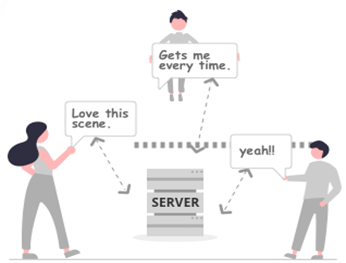
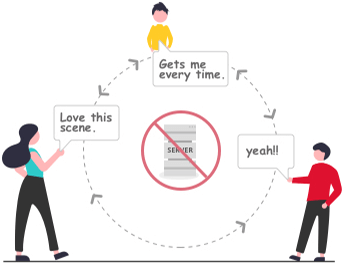
* In some cases, firewall setting doesn't allow direct connection, the calls and messages are encrypted and transmitted via routing servers.
Dawn caught the city in a soft gold, and Daisy stepped into that light wrapped in a kebaya merah new — a modern red kebaya stitched at the intersection of memory and reinvention. It was not simply a garment but a sentence: narrow lines of embroidery tracing the pulse of family stories; a fresh silhouette that nodded to kebaya forms passed down through generations while insisting on a contemporary cadence.
Seasons turned. The kebaya faded minimally with wear, the red deepening at points of frequent friction, lightening where sun kissed it repeatedly. Each mark became a new annotation in the dress’s margin: the coffee spill at that café, the hasty repair after a glass broke at a neighbor’s dinner, the thread replaced after a snag at a train station. Those small repairs made it more intimate, an object whose value multiplied because it had been lived in.
Language around the piece shifted in social feeds. “Kebaya merah new” became a tag, then a phrase in conversation: a shorthand for a certain posture toward culture — respectful, inventive, and deliberate. Some used it to declare an aesthetic; others to mark a movement toward local artisanship. Criticism arrived too: accusations of trendiness, of reducing ritual to wardrobe. Daisy listened, sometimes defended choices, sometimes accepted critique as necessary friction. The dress lived most vividly, though, where fabric touched skin — in the warmth of movement, in the small adjustments that made it wholly hers.
This garment also narrated the economy of fashion: the seamstress who earned steady days because Daisy sought local craftsmanship; the boutique owner who curated small runs of “new kebaya” pieces for urban buyers searching for cultural markers that signal both belonging and modern taste. There were tensions here: commodification and appreciation, cultural lineage and trend cycles. Yet Daisy’s approach attempted to steer those tensions toward sustainment rather than spectacle. She favored makers she could meet, materials that showed provenance, and a design that endured beyond a single season.
The chronicle of any dress expands beyond its cloth; it accumulates the ways it interacts with place and body. On the tram, the kebaya’s hem skimmed the seat, and Daisy noticed how strangers’ glances changed: some quick, polite; others curious, as if the red demanded a story. In a café, an elderly woman later confessed she had married in a similar tone fifty years prior; they compared notes about lace and fade. In the studio that night, crouched over bolt swatches, Daisy found herself sketching alterations — a shorter cuff, a ribbon of contrasting thread — each small tweak a private negotiation between reverence and reinvention.
The fabric itself was a conversation. Fine cotton-lace panels whispered village workshops where grandmothers bent over frames, knotting patterns learned by heart. Panels of crepe were inserted with a contemporary geometry: asymmetric hems, a dipped back, a sleeve that finished in a subtle flare. The embroidery borrowed motifs faithful to ancestral symbols — fern fronds, small stars, a looping seed pattern — but these were reworked, slightly abstracted, their symmetry loosened as if to make room for movement. Buttons were replaced by hidden hooks; a modern zip lay hidden along the side seam, a seamstress’s small rebellion to ease and practicality.
Chronicles are, in part, about lineage. The kebaya’s history spans ports and softened borders: Dutch-colonial salons, Peranakan courtships, sewing rooms lit by kerosene, later bulbs. The kebaya merah new carried that layered history without fetishizing it. Its red did not scream authenticity as a test; it simply acknowledged that every traditional garment can be a living, negotiated thing. Daisy remembered her grandmother’s hands — the way those hands mended a sleeve with a patient needle, the faint scent of coconut oil and old thread — and she recognized that stitching today was a continuation, not an imitation.
Dawn caught the city in a soft gold, and Daisy stepped into that light wrapped in a kebaya merah new — a modern red kebaya stitched at the intersection of memory and reinvention. It was not simply a garment but a sentence: narrow lines of embroidery tracing the pulse of family stories; a fresh silhouette that nodded to kebaya forms passed down through generations while insisting on a contemporary cadence.
Seasons turned. The kebaya faded minimally with wear, the red deepening at points of frequent friction, lightening where sun kissed it repeatedly. Each mark became a new annotation in the dress’s margin: the coffee spill at that café, the hasty repair after a glass broke at a neighbor’s dinner, the thread replaced after a snag at a train station. Those small repairs made it more intimate, an object whose value multiplied because it had been lived in. daisy bae kebaya merah new
Language around the piece shifted in social feeds. “Kebaya merah new” became a tag, then a phrase in conversation: a shorthand for a certain posture toward culture — respectful, inventive, and deliberate. Some used it to declare an aesthetic; others to mark a movement toward local artisanship. Criticism arrived too: accusations of trendiness, of reducing ritual to wardrobe. Daisy listened, sometimes defended choices, sometimes accepted critique as necessary friction. The dress lived most vividly, though, where fabric touched skin — in the warmth of movement, in the small adjustments that made it wholly hers. Dawn caught the city in a soft gold,
This garment also narrated the economy of fashion: the seamstress who earned steady days because Daisy sought local craftsmanship; the boutique owner who curated small runs of “new kebaya” pieces for urban buyers searching for cultural markers that signal both belonging and modern taste. There were tensions here: commodification and appreciation, cultural lineage and trend cycles. Yet Daisy’s approach attempted to steer those tensions toward sustainment rather than spectacle. She favored makers she could meet, materials that showed provenance, and a design that endured beyond a single season. The kebaya faded minimally with wear, the red
The chronicle of any dress expands beyond its cloth; it accumulates the ways it interacts with place and body. On the tram, the kebaya’s hem skimmed the seat, and Daisy noticed how strangers’ glances changed: some quick, polite; others curious, as if the red demanded a story. In a café, an elderly woman later confessed she had married in a similar tone fifty years prior; they compared notes about lace and fade. In the studio that night, crouched over bolt swatches, Daisy found herself sketching alterations — a shorter cuff, a ribbon of contrasting thread — each small tweak a private negotiation between reverence and reinvention.
The fabric itself was a conversation. Fine cotton-lace panels whispered village workshops where grandmothers bent over frames, knotting patterns learned by heart. Panels of crepe were inserted with a contemporary geometry: asymmetric hems, a dipped back, a sleeve that finished in a subtle flare. The embroidery borrowed motifs faithful to ancestral symbols — fern fronds, small stars, a looping seed pattern — but these were reworked, slightly abstracted, their symmetry loosened as if to make room for movement. Buttons were replaced by hidden hooks; a modern zip lay hidden along the side seam, a seamstress’s small rebellion to ease and practicality.
Chronicles are, in part, about lineage. The kebaya’s history spans ports and softened borders: Dutch-colonial salons, Peranakan courtships, sewing rooms lit by kerosene, later bulbs. The kebaya merah new carried that layered history without fetishizing it. Its red did not scream authenticity as a test; it simply acknowledged that every traditional garment can be a living, negotiated thing. Daisy remembered her grandmother’s hands — the way those hands mended a sleeve with a patient needle, the faint scent of coconut oil and old thread — and she recognized that stitching today was a continuation, not an imitation.