Oligoscan is an innovative medical device
Physiological imbalance screening. Non-invasive, no blood test needed.
Learn moreOligoscan easy to use
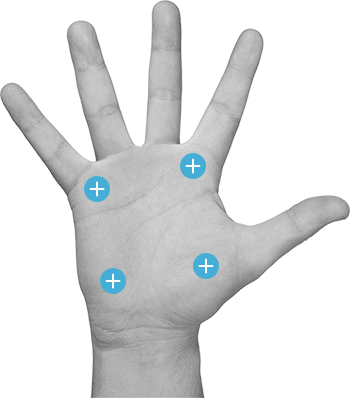
A quick evaluation of minerals and toxic metals in the palm of the hand.
Learn moreScreening of physiological imbalances helps better health control and trace minerals overall wellbeing.

Excess and deficiency in minerals
A risk of toxic metals poisoning
Responsible for aging and numerous other diseases
Instant measurements of minerals, trace elements, oxidative stress and toxic metals.
Oligoscan can be used by all health specialists allowing for rapid and pain free analysis.
The measurement is taken directly by a portable spectrometer connected to a computer
The technology is based on spectroscopy
Evaluation of trace minerals reserves, the level of oxidative stress and toxic metals
Non-invasive measurement taken in situ
The record provided allows for detection of trace elements and minerals deficiencies as well as high rate of toxic metals in the body.
Oligoscan is now used by health professionals in many countries as a solution whenever a quick and accurate analysis of the level of trace elements, minerals and toxic metals is needed.
The Oligoscan uses optical technology : spectrophotometry.

This is a quantitative analytical method of measuring the absorption or the optical density of a chemical.
It is based on the principle of absorption, transmission or reflection of light by the chemical compounds over a certain wavelength range.
Spectrophotometry is used in many areas : chemicals, pharmaceuticals, environment, food, biology, medical / clinical, industrial and others.
In the medical field, spectrophotometry is used to examine blood or tissue.
The Oligoscan is a reliable and scientifically proven tool..
A set of tests and comparative studies have been made by researchers highlighting a correlation between the results of the Oligoscan and those performed in the laboratory.
In terms of style, the artist might employ surreal imagery, rapid cuts, ironic or absurdist humor, or juxtaposition of text and visuals to create a disorienting effect. The use of "crazy" could relate to the content's intensity, instability, or the exploration of mental states.
Since I can't access the work directly, the analysis will have to be speculative. I should acknowledge the limitations but still provide a plausible interpretation. I could structure the paper around themes like the role of the prologue in digital storytelling, the use of chaos and order, the interplay between creator and audience in underground art, and the significance of digital portability in modern media. Also, considering the term "wanker," there might be humor or subversion of norms.
Another angle is the deconstruction of the "Prologue" itself. What does the prologue do in traditional narratives, and how might this one subvert or expand that role? In digital media, prologues might serve as hooks, teasers, or invitations to engage further. The title's part number suggests a series, so the prologue could be teasing expansion or a longer narrative arc.
Potential sections: Introduction, Background on the Artist, Thematic Analysis, Structural Elements, Reception and Critique, Conclusion. Each section would need to hypothesize based on similar works or artist tendencies. I should also consider if the prologue uses avant-garde techniques like non-linear storytelling, collage of disparate media, or experimental sound design.
Possible themes to explore: madness, deconstruction of storytelling, exploration of digital media's impact on art, postmodern fragmentation, self-referential content, or critique of internet culture. I might analyze the prologue's structure, use of multimedia elements, narrative techniques, recurring motifs, and its relationship to the broader genre or movement it's part of.
In summary, the paper would need to explore these speculative thematic elements, structural aspects, and contextual factors, keeping in mind the speculative nature due to lack of primary material. Properly framing the analysis as possibilities grounded in typical avant-garde practices would be key.
Since I don't have access to the actual work, I'll have to make educated guesses based on the title and possible trends. The term "Prologue" implies setup, so maybe it's a prelude to a larger project. "Crazy" might refer to the narrative's unpredictability, the creator's style, or the audience's reaction. "Son" could be a character or a metaphor (like a creation, offspring of ideas). The phrase "Portable" in the artist's name suggests accessibility, maybe DIY production, or the idea of something that can be carried or distributed easily.
I need to be cautious about assuming too much without the actual work, so I should frame my analysis as interpretations that might be supported by actual content. Maybe reference other works that share similar elements for comparative analysis. Also, consider the cultural context—when was this created, and what trends in digital art or music were prevalent at that time?
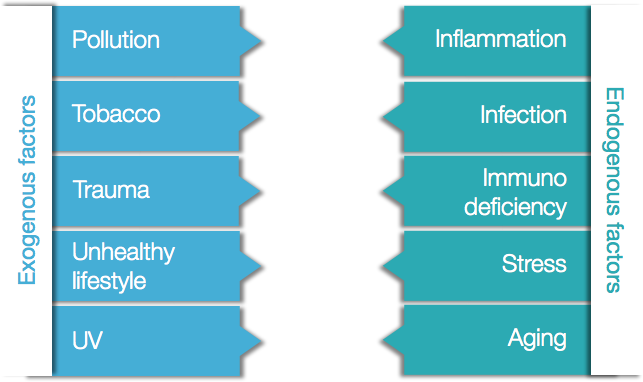
Free radicals are molecules produced in small amounts by the body. These free radicals are very reactive substances, capable of damaging the components of the cells (enzyme proteins, lipid membranes, DNA).
Their production is particularly stimulated by the exposure to sunlight (UV), tobacco, pollution, pesticides, etc.
A diet rich in antioxidants, particularly found in some fruits and vegetables, is essential in fighting free radicals.
Some scientific references :
In terms of style, the artist might employ surreal imagery, rapid cuts, ironic or absurdist humor, or juxtaposition of text and visuals to create a disorienting effect. The use of "crazy" could relate to the content's intensity, instability, or the exploration of mental states.
Since I can't access the work directly, the analysis will have to be speculative. I should acknowledge the limitations but still provide a plausible interpretation. I could structure the paper around themes like the role of the prologue in digital storytelling, the use of chaos and order, the interplay between creator and audience in underground art, and the significance of digital portability in modern media. Also, considering the term "wanker," there might be humor or subversion of norms.
Another angle is the deconstruction of the "Prologue" itself. What does the prologue do in traditional narratives, and how might this one subvert or expand that role? In digital media, prologues might serve as hooks, teasers, or invitations to engage further. The title's part number suggests a series, so the prologue could be teasing expansion or a longer narrative arc.
Potential sections: Introduction, Background on the Artist, Thematic Analysis, Structural Elements, Reception and Critique, Conclusion. Each section would need to hypothesize based on similar works or artist tendencies. I should also consider if the prologue uses avant-garde techniques like non-linear storytelling, collage of disparate media, or experimental sound design.
Possible themes to explore: madness, deconstruction of storytelling, exploration of digital media's impact on art, postmodern fragmentation, self-referential content, or critique of internet culture. I might analyze the prologue's structure, use of multimedia elements, narrative techniques, recurring motifs, and its relationship to the broader genre or movement it's part of.
In summary, the paper would need to explore these speculative thematic elements, structural aspects, and contextual factors, keeping in mind the speculative nature due to lack of primary material. Properly framing the analysis as possibilities grounded in typical avant-garde practices would be key.
Since I don't have access to the actual work, I'll have to make educated guesses based on the title and possible trends. The term "Prologue" implies setup, so maybe it's a prelude to a larger project. "Crazy" might refer to the narrative's unpredictability, the creator's style, or the audience's reaction. "Son" could be a character or a metaphor (like a creation, offspring of ideas). The phrase "Portable" in the artist's name suggests accessibility, maybe DIY production, or the idea of something that can be carried or distributed easily.
I need to be cautious about assuming too much without the actual work, so I should frame my analysis as interpretations that might be supported by actual content. Maybe reference other works that share similar elements for comparative analysis. Also, consider the cultural context—when was this created, and what trends in digital art or music were prevalent at that time?