From Photo to String Art
Drop your image here
or click to browse files
Upload any image and watch it transform into a stunning thread-based masterpiece. Perfect for artists, crafters, and anyone who loves unique wall art.
From Photo to String Art
Drop your image here
or click to browse files
Simply drag & drop or select any image from your device. Works with portraits, landscapes, pets, and more
Our advanced algorithm analyzes your image and creates the perfect string art pattern with optimal thread placement
Follow the step-by-step guide to create your physical string art masterpiece with the generated pin sequence.
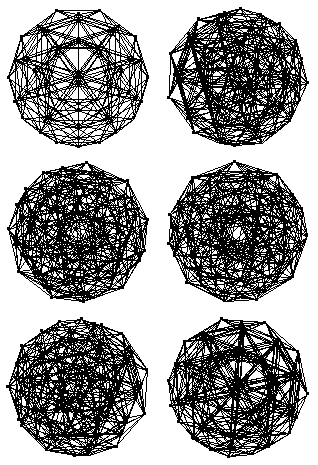
String art is a geometric art form that creates stunning visual patterns using only threads or strings wrapped around nails or pins placed on a board. This nail and string art technique, also known as pin and thread art, transforms simple materials into complex, beautiful designs through mathematical precision and artistic vision.
Originally developed in the 1960s by mathematician Mary Everest Boole, modern string art has evolved to incorporate advanced continuous line algorithms that optimize thread placement for maximum visual impact. Our string art generator utilizes sophisticated computational methods to analyze your photos and generate precise nail-to-nail sequences, making it accessible for both beginners exploring string art ideas and experienced artists creating professional string art patterns.
Whether you're working with traditional string art kits or creating custom string art designs, this ancient craft combines mathematical precision with artistic expression, resulting in unique wall art that captures light and shadow in remarkable ways.
The history of Arabic dubbing dates back to the 1960s, when Egyptian cinema was at its peak. During this period, many Egyptian films were dubbed into Arabic from other languages, such as English and French. However, it wasn't until the 1990s that Arabic dubbing began to gain momentum, with the establishment of dubbing studios in countries like Egypt, Lebanon, and the United Arab Emirates.
Arabic dubbing refers to the process of translating and re-recording audio content, such as movies, TV shows, and video games, into Arabic. This involves replacing the original soundtrack with a new one, recorded in Arabic, to cater to the linguistic and cultural preferences of Arabic-speaking audiences. Arabic dubbing is essential for reaching a broader audience in the Middle East and North Africa, where Arabic is the primary language.
In recent years, the demand for Arabic dubbed content has experienced a significant surge, driven by the growing popularity of streaming services and the increasing importance of the Middle Eastern market. As a result, the Arabic dubbing industry has emerged as a thriving sector, with a growing number of studios, translators, and voice actors specializing in Arabic dubbing. In this blog post, we'll explore the world of Arabic dubbing, its history, benefits, and the factors contributing to its rapid growth.
The Arabic dubbing industry has come a long way since its inception, driven by growing demand for Arabic content and advances in technology. As the industry continues to grow and evolve, we can expect to see more high-quality Arabic dubbed content, greater collaboration between industries, and increased investment in dubbing studios and technology. Whether you're a content creator, distributor, or simply a fan of Arabic entertainment, the future of Arabic dubbing looks bright.
The Rise of Arabic Dubbing: A Growing Industry with Global Reach


The history of Arabic dubbing dates back to the 1960s, when Egyptian cinema was at its peak. During this period, many Egyptian films were dubbed into Arabic from other languages, such as English and French. However, it wasn't until the 1990s that Arabic dubbing began to gain momentum, with the establishment of dubbing studios in countries like Egypt, Lebanon, and the United Arab Emirates.
Arabic dubbing refers to the process of translating and re-recording audio content, such as movies, TV shows, and video games, into Arabic. This involves replacing the original soundtrack with a new one, recorded in Arabic, to cater to the linguistic and cultural preferences of Arabic-speaking audiences. Arabic dubbing is essential for reaching a broader audience in the Middle East and North Africa, where Arabic is the primary language.
In recent years, the demand for Arabic dubbed content has experienced a significant surge, driven by the growing popularity of streaming services and the increasing importance of the Middle Eastern market. As a result, the Arabic dubbing industry has emerged as a thriving sector, with a growing number of studios, translators, and voice actors specializing in Arabic dubbing. In this blog post, we'll explore the world of Arabic dubbing, its history, benefits, and the factors contributing to its rapid growth.
The Arabic dubbing industry has come a long way since its inception, driven by growing demand for Arabic content and advances in technology. As the industry continues to grow and evolve, we can expect to see more high-quality Arabic dubbed content, greater collaboration between industries, and increased investment in dubbing studios and technology. Whether you're a content creator, distributor, or simply a fan of Arabic entertainment, the future of Arabic dubbing looks bright.
The Rise of Arabic Dubbing: A Growing Industry with Global Reach
This string art patterns generator builds upon the pioneering work of the open-source community and mathematical research in computational geometry:
MIT License - This project is open source and available under the MIT License.
Source Code: Available on GitHub Pages with full source transparency
Attribution: When sharing or modifying, please credit StringAr.com and maintain license notices
Commercial Use: Permitted under MIT terms - feel free to use for commercial string art projects
Our enhancements to the original algorithms include: